25 Years of Looking In, observations from New Zealand’s Private Property Office
Disclaimer: The views expressed in this article are based entirely on my personal experience and opinion, accumulated over 25 years working in and around the New Zealand property market. I am not a real estate agent and never have been. Nothing in this article should be construed as legal or financial advice.
I founded Privé in 2001. In the years since, I have represented private buyers and international families acquiring and building property across New Zealand and beyond, watching the market evolve through multiple cycles, regulatory shifts, and significant structural change.
We don’t sell property. We don’t earn commissions. We sell only our time and our judgement, working solely for the buyer with no conflicted incentives. That position outside the industry is precisely what gives me the vantage point to write this.
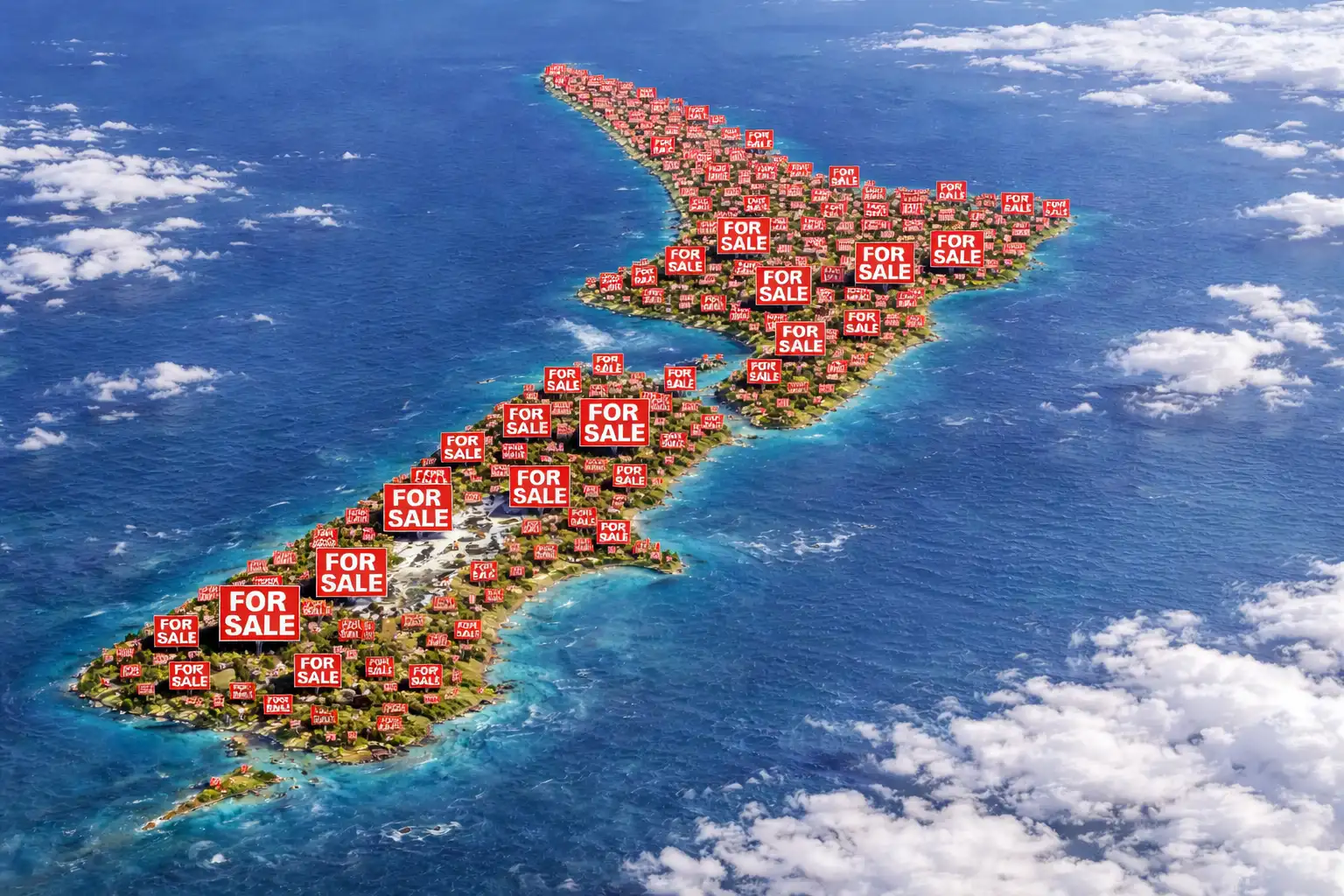
The New Zealand real estate market is at an inflection point. The commission model that has defined this industry for decades is beginning to face the scrutiny it deserves. Buyers are more informed. Technology is reshaping how property is marketed and discovered. And the emergence of buyer-side representation is slowly, if imperfectly, introducing a new dynamic into a market that has long operated almost entirely in the vendor’s favour.
What follows is not an attack on the profession. There are genuinely skilled and ethical people working within it, and the best of them provide real value. But the structure they operate within contains tensions that deserve honest examination, for the benefit of buyers, vendors, and ultimately the industry itself.
The Most Important Learning: Real Estate Agents Represent the Vendor, Not the Buyer.
It’s quite surprising how few buyers understand this, and New Zealand’s real estate law is unambiguous on this point. When you walk through an open home, the real estate agent greeting you at the door is legally obligated to represent the vendor’s interests. One hundred percent. They don’t represent the buyer at all. This isn’t a secret, but it’s something many buyers genuinely don’t appreciate until after a deal has been struck.
That agent’s job is to achieve the highest possible price for their client, the vendor. The higher the sale price, the higher their commission. Their financial incentive and your interests as a buyer are, structurally, in direct opposition. Once buyers understand this, every negotiation should in theory be easier.
If there’s one learning you should take from this article is this, so you can stop reading now.
The Commission Model: Overdue for Reinvention
New Zealand’s real estate industry is one of the few in which an agent can earn very high commissions selling products they don’t own and carry no financial risk in, while the vendor simultaneously funds the marketing campaign from their own pocket.
Think about that structure carefully. The vendor pays for photography, digital advertising, print materials, and open home costs, effectively promoting both their property and the agent, and then pays a percentage commission on the final sale price on top of that. In return, they receive the agent’s expertise, their database of potential buyers, and their ability to manage the sales process.
The database, often cited as a core part of the value proposition, deserves scrutiny. Most residential buyers are not repeat purchasers within the typical seven-year property resale window. Every new listing essentially requires a fresh marketing campaign to attract a fresh audience. How much of a sale today actually originates from an agent’s proprietary database versus the large public property portals and social media? It is a question vendors rarely think to ask, and agents rarely volunteer an answer to.
Commission rates are negotiable. The figure first quoted is rarely the only option, and the gap between what is asked and what is achievable may be larger than most vendors realise.
Where commissions of 2% were once negotiable and common, 4% plus GST is increasingly presented as the norm, particularly in premium urban markets. For context: I recently organised the sale of a property in the United Kingdom for an agreed commission of 0.5%, with no separate marketing fee charged. The question worth asking is what structural difference between those markets justifies a rate eight times higher.
On a $3 million New Zealand property, 4% represents $120,000 before tax, on top of marketing costs the vendor has already funded. On a $5 million property, the figure becomes staggering. This normalisation of higher rates has happened quietly, without any corresponding increase in the complexity or quality of service delivered. Many real estate companies will also change additional administration fees as well, so make sure you check the small print carefully.
There are still agents offering 2% commissions who do excellent work. Vendors should shop around, negotiate confidently, and never treat the first number quoted as fixed.
It is also worth understanding that many agents share a portion of their commission with their agency, a split that varies by brand and by agreement. In slow markets, that sharing arrangement can represent a significant cost to agents who have done the majority of the work. It is one of several pressures the commission-only model creates that are rarely visible to clients.
The Asymmetry the Car Salesman Analogy Actually Reveals
Real estate agents have long bristled at being compared to used car salespeople. Spend a moment with the comparison seriously, however, and something unexpected emerges: the analogy is more unflattering to real estate than to the car trade.
The used car dealer buys their stock. They tie up their own capital in vehicles that may sit unsold for months. They fund their own advertising. They carry holding costs. If they misread the market or overpay for inventory, they absorb that loss personally. Their livelihood is directly connected to their ability to assess what they are selling and price it accurately. That creates a powerful incentive to know their product deeply.
The real estate agent, by contrast, carries no equivalent financial risk. The vendor funds the marketing. If the property fails to sell, the agent loses time, genuine, but not capital. There is no financial floor to get through, no inventory to write down. Many agents may turn down a property listing opportunity if they feel the vendor’s expectations are unrealistic, or the property itself is going to be hard to sell, they know their investment in time for the property is of higher risk, so they choose the properties that they hope will sell quickest. New agents may not be so lucky to have that choice.
The product knowledge gap this creates is more significant than the industry typically acknowledges. Most agents I have encountered would not be able to tell you how a house is constructed to a professional level, which building materials are more durable or sustainable, or how to assess the long-term structural implications of what they are selling. They tend to judge a home on appearance, which is, to be fair, how most buyers judge it too. You may argue that their job is to simply introduce the property to the buyers, and repeat verbatim what the vendor has told them, and you may have a point.
I was reminded of these shortfalls recently when, during a viewing, an agent was unable to tell me which direction the house faced, a fundamental factor in assessing daylight exposure and liveability. It was a small moment, but an illustrative one.
When Agents Need the Deal More Than You Do
There is a dimension of the commission model that rarely surfaces in public conversation, and it is one that generates genuine sympathy for agents as individuals even as it creates structural problems for clients.
New Zealand Real estate is predominantly a commission-only profession. In a buoyant market, that arrangement is lucrative. In a slow one, and New Zealand has experienced extended slow periods in recent years, it can mean going months without a meaningful pay cheque. The personal financial pressure that creates is real, and visible to anyone paying close attention to negotiations.
An agent who has not closed a deal in ten or twelve weeks may not be approaching your sale with the same equanimity as one who settled three properties last month. Their circumstances may become a factor in the advice they give, consciously or not. The urgency to get a deal across the line can translate into pressure on vendors to accept offers that warrant more patience, or into buyers being nudged toward decisions before they are truly ready.
This is not a character flaw. It is a predictable outcome of any commission-only-based system that provides no financial floor for the people operating within it. Very few professional service industries operate this way, and those that have moved toward base salaries with performance incentives have generally done so because pure commission models can create misaligned incentives at precisely the moments when clear-headed advice matters most.
There is a reasonable argument for the industry to explore a more sustainable structure: a good base salary for licensed agents, with performance-based incentives on top, and potentially tiered or flat-fee commission models that do not scale linearly with property value. The service required to sell a $1 million home is not categorically different from what is required on a $10 million one. The current model does not reflect that.
It’s interesting to note that a few real estate companies have tried a few different models and not succeeded, for whatever reason.
The Rise of the Buyer’s Agent, and Its Unresolved Tensions
New Zealand is beginning to see meaningful growth in buyer-side representation: registered agents who, in theory, work exclusively for the buyer. This has been accelerated by a quieter property market and growing interest from Active Investor Plus visa holders, who under current rules may purchase residential property above NZD $5 million.
The principle is sound. Having genuinely independent representation when making a significant financial decision is not a luxury, it is rational risk management. The question is whether the execution matches the principle.
The majority of buyer’s agents in New Zealand charge a commission based on the purchase price of the property they help secure. This creates an immediate structural problem: the more expensive the property, the higher the buyer’s agent’s fee. The very person retained to protect your interests and negotiate the best possible price has a financial incentive to guide you toward the most expensive option, with less motivation to push back on an overvalued one.
A truly independent buyer’s agent should have no financial preference between a $4 million property and a $6 million one. A commission-based structure makes that independence structurally impossible.
There is also something that deserves to be stated plainly: when a commission-based buyer’s agent is involved, the buyer effectively funds both commissions.
Here is how the arithmetic works. A vendor sets a price that reflects the figure they want to walk away with say, $3 million, and builds the selling commission into the asking price. The buyer pays a figure that already embeds the vendor’s agent’s fee. The vendor receives what they wanted. The selling agent receives their commission. And the buyer’s agent then charges their own percentage on top.
The buyer has now funded two separate commissions on the same transaction: one absorbed into the purchase price, one charged directly. It is a material cost that is rarely presented transparently at the outset.
A flat-fee model for buyer’s agents would resolve this cleanly. A fixed engagement fee, regardless of property value, properly aligns the buyer’s agent’s incentive with the buyer’s actual goal: finding the right property, in the right location, at the right price, not the most expensive one the buyer can be persuaded to stretch to.
A further tension arises when a single real estate organisation attempts to represent both vendor and buyer in the same transaction. This is not hypothetical. It happens. The conflicts of interest in such arrangements are significant, and buyers should ask the question directly before engaging.
Brand Accountability: The Gap Between the Sign and the Agent
Most agents in New Zealand operate as self-employed individuals working under the umbrella of a recognisable brand; Ray White, Bayleys, Harcourts, and others. That brand provides credibility, marketing infrastructure, and reach. What it often does not provide, in my experience, is meaningful accountability when things go wrong.
When a complaint is made to the Real Estate Authority about an agent’s conduct, it targets the individual’s licence, not the company whose name appears on every marketing board outside the property.
For buyers or vendors who believe they have been genuinely wronged, this can be disorienting. The practical recourse available through the REA’s complaints process is more limited than many people assume. It is, in my experience across 25 years in this market, uncommon for meaningful financial redress to result, which is precisely why independent due diligence before any transaction is more valuable than any regulatory safety net after it. Prevention is always better than cure.
This is not uniformly true. Some agencies do take responsibility seriously. But vendors and buyers alike should ask the question before they sign: if something goes wrong, who exactly stands behind the advice I am receiving and what compensation can I achieve?
The Culture of Competition, and What It Costs Clients
Behind the shared branding and shared offices, many agents function as deeply independent operators competing with the colleagues sitting a few metres away. Listings are contested. Clients are closely guarded. Referrals between agents, even within the same office, are the exception, because every referral represents a commission potentially surrendered.
The consequences for clients can be material. Buyers may not be shown properties listed by competing agencies. An offer brought by a buyer working with a rival agent may receive less enthusiasm than one sourced internally. Market intelligence that would genuinely serve a vendor may not be shared, because sharing it could benefit a competitor.
The irony is that the premium end of New Zealand real estate generates the kind of commission revenue that could comfortably support a very different culture, one built on structured collaboration, shared research, and genuine client-first practice. Those things are not financially impossible. They are seemingly culturally absent.
On Privacy, Discretion, and Who the Industry Actually Serves
One issue deserves particular attention, because it touches directly on the clients Privé exists to serve.
In my dealings with a premium realty company in Queenstown, I have encountered a requirement that buyer’s representatives disclose the identity of their client before the agency will engage to arrange a viewing. I want to be clear that this reflects my own experience in that specific context, and I cannot speak to how other offices in the same network operate.
But for Privé, this condition is a non-starter. Protecting the identity and intentions of our clients is foundational to what we do. For well-known individuals, for family offices, for international buyers for whom discretion is not a preference but a professional and personal necessity, revealing who a buyer is before a viewing compromises both their privacy and their negotiating position.
In practice, the outcome is that those vendors miss out on being introduced to a pool of qualified, serious buyers, a pool that is, at the premium end of the Queenstown market, already small. Every other agency we work with in New Zealand understands and respects buyer confidentiality. When a particular office takes a different approach, it is ultimately the vendor who bears the cost.
Vendors considering listing with any agency in the premium market should ask directly: will you work constructively with representatives who protect their clients’ identity?
The Regulatory Question Worth Asking
New Zealand’s Real Estate Authority exists, in theory, to protect consumers. Agents must be licensed, complete continuing education, adhere to a code of conduct, and meet insurance requirements. The compliance burden is real and growing.
And yet, sitting entirely outside this regulatory framework are three categories of seller who together account for a significant share of New Zealand’s property transactions: private sellers, lawyers acting in property sales, and property developers selling their own stock. Each of these can sell property, sometimes at considerable scale, without a real estate licence.
If the licensing regime is genuinely essential to consumer protection, which I don’t feel it is, the question worth asking is why these categories are permitted to operate outside it without apparent harm. And if a licensed agent can mislead a buyer (knowingly or unknowingly), withhold material information, and leave that buyer to navigate a reactive complaints process largely alone, what exactly is the licence guaranteeing?
The buyer spending $5 million on a Queenstown property is not well served by a regulatory body that processes complaints after the fact. They are served by understanding precisely what they are buying, before they commit.
There is a credible alternative argument: that rigorous buyer due diligence, supported by accessible plain-language guidance and genuinely independent legal advice, would serve buyers better than a licensing regime with the accountability gaps the current system contains. It puts the onus 100% on the buyer.
Deregulation is not a mainstream conversation in New Zealand real estate yet. But it is perhaps a legitimate one. The people ultimately funding the entire commission-and-compliance structure through prices that have to accommodate everyone’s fees are arguably the buyers. That gives them every right to ask whether the structure serves them.
What Buyers Must Do: Due Diligence is Non-Negotiable
Whatever form your representation takes, there is one principle that cannot be stated strongly enough: do your own due diligence. Completely and thoroughly.
Even the most ethical, skilled agent in the country represents the vendor. Even a well-intentioned buyer’s agent may not catch everything. There are facts that could materially affect a property’s value, liveability, or insurability that can be overlooked, minimised, or not volunteered. Among the things worth investigating independently:
- Flood zone overlays affecting all or part of the land
- Planned infrastructure, roads, motorways, or industrial developments in proximity
- Rezoning for housing intensification, which can affect privacy, parking, noise, and long-term value
- Insurance implications arising from any of the above
- Independent building and land surveys identifying structural or environmental issues
Talk to council planners. Engage a good property lawyer. Commission independent building and environmental reports. These steps carry a cost, one that is insignificant relative to the scale of the decision you are making. They may also create the basis for renegotiating a lower price.
Do not treat anything a vendor, or vendor’s agent tells you as a substitute for independent verification. Treat it as a starting point for investigation.
What Vendors Should Consider
The case for attempting a private sale before engaging an agent is stronger than most people give it credit for. Modern marketing platforms have made direct-to-market more accessible than at any previous point, and private sellers retain full control of the narrative, the process, and the terms.
If private sale does not suit your circumstances, choose your agent carefully. Look beyond the listing presentation and the claims about their database. Ask specifically how they handle buyer’s agents or buyer’s representatives approaching your property. Ask whether they will work constructively with parties who protect their clients’ identity, because the answer may tell you something important about how seriously they take your interests.
Ask about their approach to pricing. Are they telling you what the market will support, or what you want to hear in order to secure the listing? The best agents are the ones willing to have uncomfortable conversations. That candour, more than any database, is where their value lies.
Looking Forward
New Zealand’s real estate industry needs reinvention. The transparency buyers now expect in every other major financial transaction, in banking, investment, legal services, will eventually be demanded here too. Fee structures will become more visible. Buyer-side representation will mature. The question of what a real estate commission actually buys, and for whom, will be asked more loudly.
The buyers and vendors best positioned for that shift are those who are already asking these questions, who understand the structure they are operating within, seek independent advice, and work with people whose incentives are clearly aligned with their own goals.
In any significant property transaction, the most valuable thing you can have is clarity: about who represents you, how they are compensated, and whose interests they are genuinely there to serve.
At Privé, we have worked that way for 25 years. We represent buyers, only buyers, on a fee basis with no commission and no conflicted incentives. We protect the identity and intentions of our clients as a non-negotiable foundation of how we work. And we believe that model, transparent, independent, genuinely buyer-first, is where the broader market is slowly heading.
I genuinely feel there is a lot of room for improvement, and opportunity, for new entrants to the market (and existing brands) to ask themselves if there’s a way that agents can be remunerated fairly and consistently for the services they provide, whilst reducing the sheer cost of sales.
We are in a world where affordable housing is getting increasingly more and more difficult to solve, and the current real estate model isn’t helping.