As it’s Friday, we should end the week on a lighter note, but an important one nonetheless. If I were to list my pet peeves about bad building practices, I would be here all day. However, one thing that underpins most of these unwise building practice mistakes is a lack of knowledge and common sense. Here are my top three bad building practices pet peeves:
Bad building practices #1: My biggest pet peeve is buying good products and not installing them properly. This leads to many misconceptions about product failure when, in fact, it’s not the product but the building practices that have failed. Installers don’t read the instructions and think they know best…
Bad building practices #2: My second biggest pet peeve is with electricians here in New Zealand swapping out recommended drivers for architectural lighting fixtures with cheap, low-durability drivers just so the electrician can make some extra margin. The lights seem like they are faulty, and then the lights get blamed when it is the driver that is at fault.
Bad building practices #3: My third pet peeve is a reluctance to change and adopt better building practices. If we take lighting as an example, New Zealand and Australia still use really old and inefficient dimming protocols. Most good lighting manufacturers don’t even make lighting for these protocols anymore, and it’s not even cheaper, so why do it? Because that’s what they know, and rinse and repeat makes a far easier working day than learning something new and better for the client. Even thinking about this backward thinking makes me annoyed, so I had better stop here. Over to Matt and his top 10 pet peeves.
10 Bad (and Common) Building Practices Video Transcript
On the build show today, we’re discussing construction pet peeves. I’ve been doing this for 25 years. I got my start as a production builder and have since moved on to building my own custom homes. However, there are certain things in our industry, whether you’re building production homes or custom homes, that bother me. These are my pet peeves. So, let’s get going with today’s topic: construction pet peeves.
Spray foam for air sealing purposes out of a can is utterly ineffective and does not work. Look at this! Somebody put this bead of orange fire-stopping foam all around the bottom plate to the concrete, and they did it around this outlet as well. You might think that does something, but in reality, look at all the air coming through. Look at all the light you can see around this electrical box. There’s no amount of spray foam in this two by four cavity out of a can that’s going to seal that up. That is a terrible detail, and that bottom plate spray foam, it’s not doing anything for us. Look at this air coming through and this light you can see here.
At this break between the plates, coming up through the back of the sheathing, there’s no air sealing in that spot either. You can see air and light all the way along there. I think this house would have a hard time getting its code-required blower door score of five ach 50 in this climate zone, let alone if this was built in the north where it needs to be three ach 50. It’s very leaky. There’s so much here that drives me crazy. Look at this zip sheathing, which is a great sheathing, but they’ve used another type of tape. This is asphaltic; it does not stick very well to zip sheathing. You need to use zip tape on zip sheathing. This does not stick, but my bigger pet peeve is this right here.
This is a recessed tankless water heater. They set this up so the tankless won’t stick as far out of the building. It looks like this is going to have siding or really this is set up for rock, but there’s no brick ledge. This unit is recessed into the wall, which is a really bad idea from a waterproofing perspective. We’ve got a little bit of an overhang here, but not much. Let’s test it and see if it would leak.
This is normally the outlet where the tankless is going to come out, and this is a box right here, so there’s your recess box. But see this? These are all the connections in the bottom for the tankless, and those are right in the wall. In my opinion, they are almost impossible to seal. So if we get a little bit of water in that tank over time, see that water coming out? How much of that water is going to get in and come to the inside?
Continue Reading
The bottom is sloped, which I appreciate, but if we had a good rain, which we do get pretty often, how much water, if it gets in the back here, is going to flow into the house? Let’s go inside and have a look. Yup, just as I suspected. Look at this. Now when this gets sheetrocked, the sheetrock is going to hold all this water in this cavity. The back of the sheetrock is going to mold, and even though this is pressure-treated, in time this will rot, and you’ll have a really nasty spot in your garage. Any older house that has a recessed tankless, my guess is that underneath this is a nasty area of mold growth. Not good. That is a huge pet peeve of mine.
Messy job sites. What a pet peeve of mine. Whether the builder knows what they’re doing or not, when you see a messy job site, you just automatically assume that the house is a disaster. Look at this one; it’s a mess. There’s no dumpster; there are good materials mixed with bad materials. It’s crazy. It’s ridiculous. I feel sorry for that guy working here; I wouldn’t want to work on this job site. It looks horrible. If I were that homeowner driving by, I would think this builder is terrible.
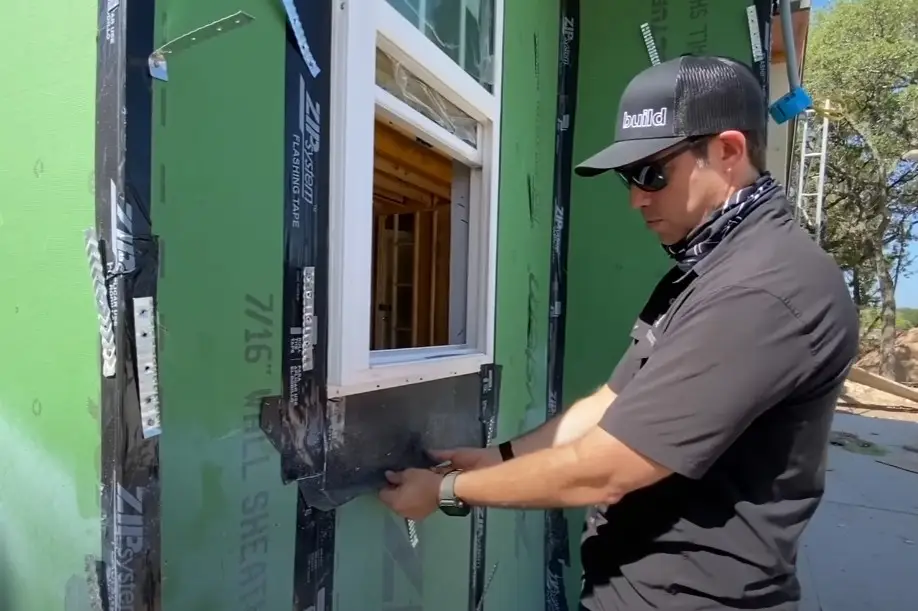
Now, look at this one on the other hand. I’m assuming this is the same builder; we’re in a production builder neighborhood. This one’s much cleaner. It’s not super clean, but at least the driveway is clear. They look like they’ve got it together. That other one looks like a trash heap. Here are two of my pet peeves right here. Not doing a proper sill pan on a window. This is a piece of basically paper with some plastic on it, and this flashing is really garbage. They’re using this kind of like a sill pan. The problem is this is not a flexible material, so in the corners, this is cut. This means that this inexpensive vinyl window, which I’ve done a video before on showing how often these leak in the corners, when and if it does leak in the corners, it’s going to leak right in the building on this house, and it’ll leak in this corner back here. It’s a terrible way to do it.
We need to use, especially if we’re using the zip system, their flexible flashing for a seal pan. So much better. But here’s the one that really bugs me, seeing this at the base of the house. This plastic and paper-based flashing that you can see rips super easily. Once it gets wet, it will totally disintegrate. I remodeled a house not too long ago that was only six or seven years old, and as we took the stone off to remodel this section, I could actually tear this with my fingertips. It was just absolutely destroyed. Not only that, it’s not doing anything for air sealing, and it’s not protecting the bottom of this wood sheathing down here. Right.
The zip system does a great job here on this face, but this face is totally wood underneath here, which means that water running down here, if it collects, and this is going to help it collect in that space, especially thinking about this. Look, this hurricane strap flapped up. This makes a perfect trough, so the bottom of that sheathing, that wood, is going to be nice and wet if water comes in here. The other thing that happens all the time is landscaping irrigation soaks the side of the house. If this area gets soaked, I guarantee you we’re going to have some rot and some problems in this house.
Another thing that bugs me, this drives me crazy. Look at this. I mean, what is that telling the homeowner about the quality of construction that their house has? It’s telling them that the guys who were doing their house were drunk. Now, is that really true? Maybe not. They had one beer at six o’clock at the end of the day, but leaving that around on the job site, the optics on that are ridiculous. The first time that something goes wrong and if that homeowner sees that, they’re going to think, “Oh, that guy was probably drunk when he did that, right?” Come on, friends, we cannot do this. My fellow builders, talk about this with your crew, with the guys working there. Don’t drink on the job. Not only are there drunk driving issues, but just the optics of that. Wait till you get home to have a beer, guys.
Remember how we showed you spray foam before and how it wasn’t a very good air sealer? It’s also not very good at waterproofing. Look at this pipe penetration through the wall. You can clearly see there’s zip sheathing back there. No tape or flashing whatsoever on this. This would be a perfect location to use zip stretch tape back there in this spot, behind there at the sheathing level. But instead, they’re going to rely on a big fat bead of caulking, and look, the siding guy didn’t even try to get that close. You’re going to really put a big bead of caulking on there? A quick flash boot, some zip liquid flash would work well. Any of those things.
The other thing I want to mention was the stucco over here is all prepped, but the air ceiling is not great. Let’s go take a look at that. So, on top of the zip sheathing, they’ve got two layers of tar paper, which is good for waterproofing. But look, if we walk inside, look at all the light coming through here. The bottom of the zip sheathing is not particularly tight up against the bottom plate. And as you walk along, you can see tons of light in that area. That’s really a place that we need to detail with a fluid applied flashing. Prosco fast flash, zip liquid flash. If we did that base wall detail there, it would be airtight and bug tight.
This house is gonna have lots of airflow in there. And look, we’ve got an electrical outlet right here. So as the air blows on that side of the house, it’s going to come up this cavity, and it’s going to come right in here. The back of the sheetrock is going to get condensation on it, and this stud bay right here, it’s probably going to have mold in a couple of years. Plus, just from an energy efficiency standpoint, we’ve got lots of air coming through there. Plus, that’s going to be a perfect spot for ants or bugs to just march right in. This customer is going to have an ant problem in their kitchen, a bug problem, a cockroach issue. They’ll have no idea where it’s coming from. They’re going to be drawn in because that cold air conditioning is going to come through this outlet and down through there, and it’s going to be an invitation for those bugs to come out of the house. Huge pet peeve.
Alright, we talked about this earlier, the light coming through this outlet. This is going to be a terrible air leak. But what’s really driving me crazy here is look at this jagged OSB on the side. The electrician clearly used a hammer to make that hole. Come on. Oh, and look, they left all the OSB right here. That is such a pet peeve of mine. Oh, here’s one that I can’t tell you how big of a pet peeve it is. This sheathing right here is basically cardboard sheathing. See this? It’s glorified cardboard. I could rip that with my hands. If this had vinyl siding on top of it, I could literally pop my knife out and break into this house with just a knife. I could just slam it through here in seconds. I won’t because I don’t want to destroy someone else’s work, but this is a terrible product for a house for several reasons.
Number one, it’s not doing very good shear value for us. But it’s really hard to waterproof and air seal as well. And look at this, look at their details where they’re penetrating up here. They’ve got some vents poking through. They’ve put a layer of tar paper, which is going to help a little bit with water shedding. But look how we basically have no waterproofing. The peeling stick they’ve used has peeled already. It’s stuck for a while, then it peeled. Same with this one over here. It’s stuck, and it peeled. Now this one above this window head is still stuck for the time being, but I would suspect that’s gonna lose its grip as well.
Now, credit to this builder for putting a head flash on. I love seeing that. But if the head flash is not integrated with something that’s gonna stay stuck, it’s a goner. And again, they’ve used this paper-based… oh no no, this is actually plastic-based flashing at the bottom. Probably a little better actually in terms of durability than that paper-based one. So it’s going to shed this water and keep this bottom plate from getting wet. That’s a good thing. But there’s no air or bug sealing going on here. Bugs that crawl up are going to crawl in right here and go right into the house. And I bet if we go inside on this house, we’re going to see daylight all along that base as well.
What we need to be using is solid sheathing, either OSB with a house wrap or zip system, and I’m glad to see that lots of production builders are moving over to zip system now. They got to get their details right. They need to use all zip sheathing tapes as well, and they need to use some liquid flash, especially at their base wall. But that solid sheathing is going to allow us to, for instance, at least do some waterproofing right here where we’ve got this recessed tankless box. You can see they’ve used zip system tape to the zip sheathing to try and at least waterproof the top of that box. Now, these outlets are cut. It looks like the siding was installed, and then this outlet was put on, so that’s a terrible detail. We don’t want to do that. But at least we’ve got a good base with that zip system sheathing.
Oh, there are so many pet peeves here. This one I’m going to focus on, though. Look at this. This kind of looks like my pant legs are up with a flood. This drives me crazy. No disrespect for any of the brands being used here, but look how this is cut short. We’ve got several inches of OSB just bare OSB showing. We’ve got to have our house wraps go past our sheathing. The idea is we’re protecting this sensitive wood material, especially bare OSB, which is more moisture sensitive than solid wood. This needs to go past that.
Guys, thanks for joining me for a few of my building pet peeves. The point in this video is not to bash those builders. I’ve learned so much over the years. Anytime I shoot a video, I’m always thinking, what would Matt from 10 years ago like to know today? So when you watch one of my videos, you’re taking a job site tour. I’m trying to explain things through my eyes on how you can build a better house, a house that’s not going to have mold problems, a house that’s going to be healthy, durable, and efficient. That’s always my goal.
If you’re not familiar, I actually have several other builders and one other architect also shooting videos – their version of the Build Show – on my network that I started. The website is buildshownetwork.com. Every week we have six new videos from job sites around the country teaching you about how you can build and design a better house. Go check it out. I’ll put a link in the description to sign up for our newsletter. Every Friday, I’m going to send you an email that will have a short video telling you what’s new on the website and all the links to the new content over there.
Related
10 DUMB (and Common) Building Practices on YouTube
Dismantling the Status Quo: Ian Thompson’s Vision for Building and Construction