Are Ground Screws the sustainable choice over concrete for house foundations?
For decades, concrete has been the standard go-to solution for our house foundations, but there’s an innovative alternative that’s transforming how we think about building: ground screws. These ingenious foundation solutions are changing the game for builders, engineers, and environmentally conscious developers alike. And for me, they’re potentially going to be the foundation of choice for all my housing projects. Let’s explore why.
What Exactly Are Ground Screws?
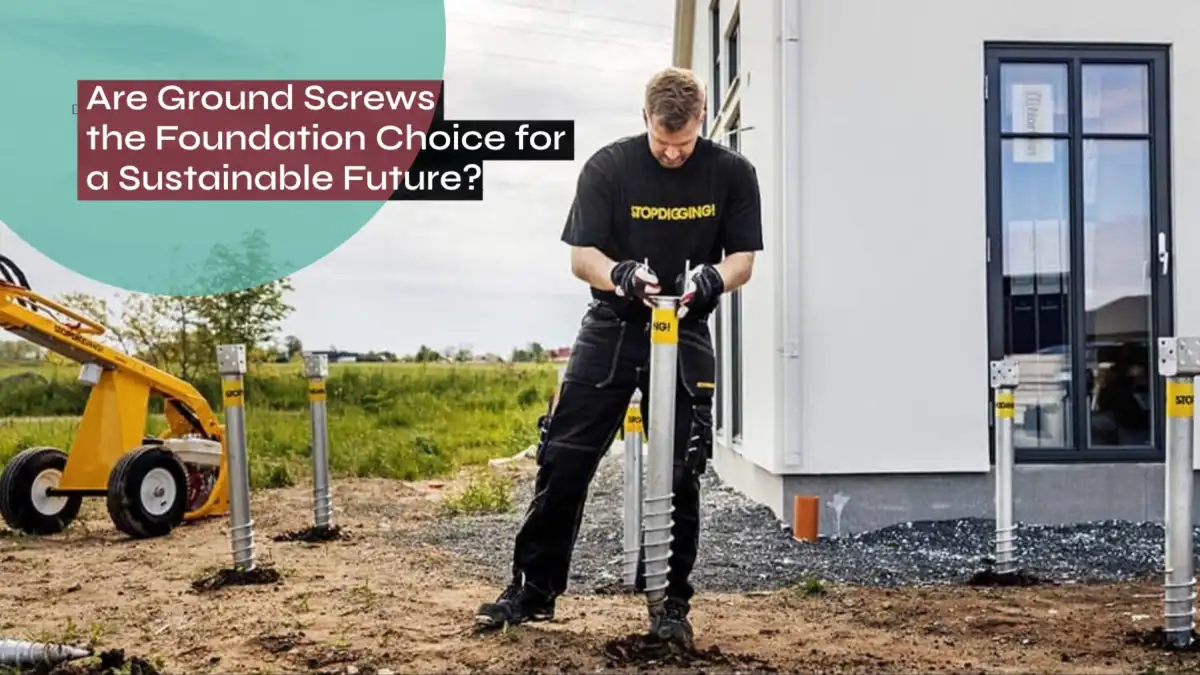
Picture a massive, precisely engineered metal screw designed to anchor structures directly into the ground. Unlike traditional foundations that require extensive excavation, mess, organisation, resources, and lengthy curing times, ground screws offer a faster, more flexible approach to creating stable building bases.
For house foundation applications they’re typically large, threaded steel rods that are mechanically screwed into the ground using specialized equipment, creating an instant, robust foundation.
The Compelling Advantages of Ground Screws
1. Speed That Revolutionizes Construction
Time is money in construction, and screw piles are a massive time-saver. While traditional concrete foundations take weeks to prepare and cure, screw piles can be installed in just a few hours. This rapid installation means:
- Dramatically reduced project timelines
- Lower labour usage and costs
- Minimal ground disruption to the construction site
- Less mess and a much safer site (no holes to fall in and less rebar to fall on)
- Ability to start subsequent construction phases much faster
2. Environmental Sustainability at Its Core
In an age of increasing environmental awareness, screw piles stand out as a green foundation solution:
- Minimal soil disturbance during installation
- Significantly lower carbon emissions compared to concrete foundations – yes, the steel does use a lot of energy to produce, but when compared to cement production it is more energy and environmentally friendly.
- Reduced need for heavy machinery and site traffic
- Preservation of existing landscape, trees, and ecosystem
- Steel is a recyclable material
- Circularity – Ground screws can be uninstalled and reused on another job.
3. Unmatched Versatility
One of the most remarkable features of ground screws is their adaptability. They can be effectively used in:
- Clay soils
- Sandy terrain
- Rocky ground
- Areas with challenging environmental conditions
This versatility makes them an ideal solution for a wide range of projects, from residential decks to large commercial structures and renewable energy installations.
4. Cost-Effectiveness Beyond Initial Installation
While the upfront cost might be comparable to traditional concrete foundations, screw piles offer significant long-term economic benefits:
- Reduced labour and equipment costs
- Minimal maintenance requirements
- Lower lifetime project expenses
- Quick installation reduces overall project timelines
- No need for extensive site preparation
- Access to services is generally much easier then pulling up a concrete slab (suspended ground floor application)
5. Durability That Stands the Test of Time
Constructed from galvanized steel, screw piles offer exceptional durability:
- Resistant to corrosion
- Consistent performance in various environmental conditions
- Long-term structural integrity (up to 100 years)
- Minimal degradation over time
Critical Considerations for Professionals
For designers and builders considering screw piles, the same analysis and specification principals apply for all foundation types:
- Comprehensive Soil Analysis
Thorough soil testing is crucial to determine the most appropriate ground screw design and installation approach. - Load-Bearing Calculations
Precise engineering calculations ensure the foundation can support the intended structure’s weight and stress. - Integration with Existing Systems
Ground Screws can be seamlessly integrated with various foundation and construction systems, even concrete slabs used as a piling system.
Diverse Applications
Screw piles aren’t limited to a single type of project. They’re successfully used in:
- Residential deck foundations
- Solar panel installations
- Agricultural structures
- Temporary and permanent fencing
- Commercial and industrial buildings
- Renewable energy infrastructure
- Coastal and marine construction
- Retaining walls
The Sustainable Construction Future
As the construction industry continues to evolve, screw piles represent more than just a foundation solution. They embody a shift towards more sustainable, efficient, and environmentally responsible building practices.
Companies at the forefront of this technology, like StopDigging, are demonstrating that innovative solutions can simultaneously address practical construction challenges and environmental concerns.
The bottom line? Ground Screws aren’t just changing how we build—they’re helping us build a more sustainable future, one foundation at a time.
Related
New House, Old Soul – Ep. 3 – Foundations & Site Layout
Pier & Beam vs Slab Foundations, What works best for your project?