If you’re looking to live in a prime location but there’s no land available, you might consider buying a really old, rundown house and tearing it down.
Sometimes, the old house may have a foundation that is partly or fully reusable, and if it is, you could save both money and time by reusing it. Let’s learn more.
Can I Reuse An Old Foundation on a New Build?
Evaluating and Reusing Existing Foundations: Insights from Matt Risinger and Jake Bruton
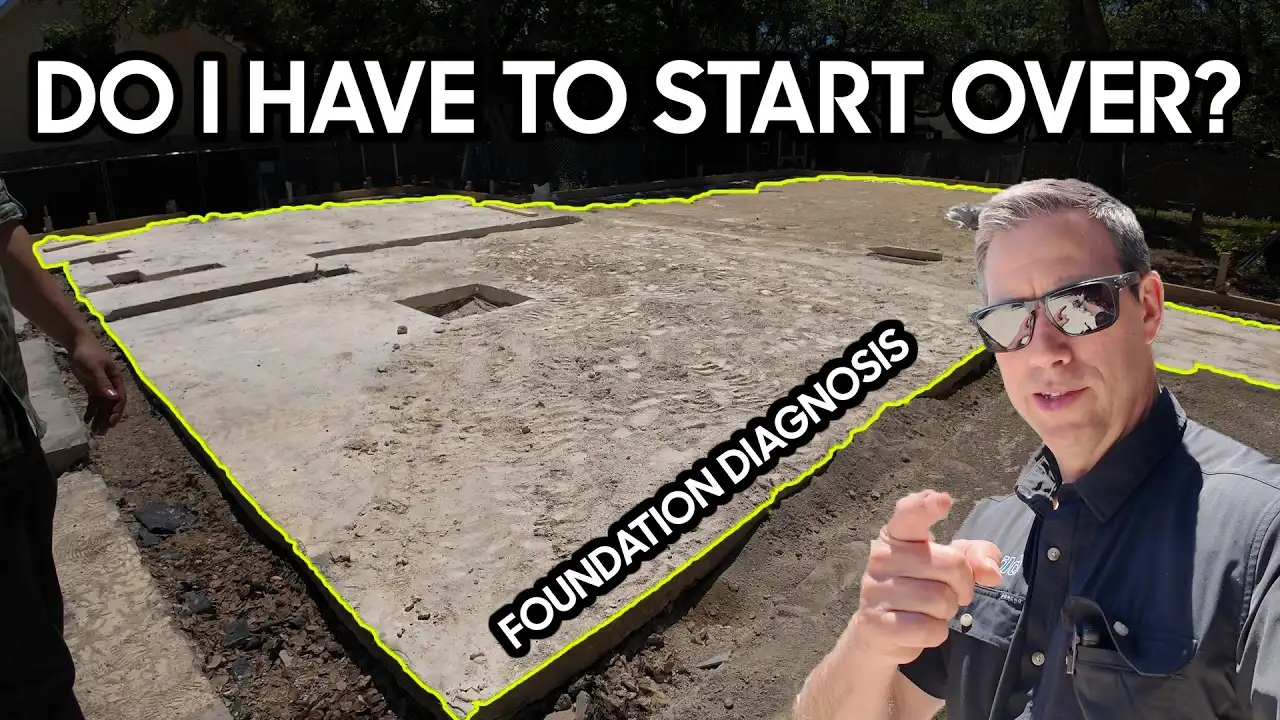
In this episode, builders Matt Risinger and Jake Bruton delve into the considerations and best practices when reusing an existing foundation for new construction or remodeling projects. Standing on a site with a 1970s slab they’re reusing, they share valuable advice on assessing an existing foundation’s viability, understanding structural implications, and the benefits of reusing over demolishing.
Assessing the Old Foundation
The first step in reusing an old foundation is thoroughly evaluating its condition. Jake observes that the slab resembles what he might see in basements in his market, noting several key features:
Presence of a Vapor Barrier: The original construction included a vapor barrier (Visqueen or poly) beneath the slab, crucial for preventing moisture from migrating into the structure.
Minimal Cracking: Despite cutting and modifying the slab, there are almost no cracks, indicating good structural integrity.
Rebar Presence and Placement: They notice rebar within the slab, though it’s smaller (possibly number three or even smaller) and located near the bottom or even below the concrete. Ideal placement is in the bottom third of the slab to reinforce tension areas.
Matt highlights that nearby houses from the same era show minimal cracking, especially in masonry façades and around windows—a common area for stress cracks due to foundation movement. This suggests that the soil in the area is stable, which is a positive sign for reusing the existing slab.
Determining Structural Requirements
Understanding the structural capacity of the old foundation is crucial:
Engineer’s Assessment: An engineer can determine whether the slab can support the new construction. In their case, architect Steve Baczek designed the house to span loads front-to-back and side-to-side without internal point loads, simplifying the reuse of the slab.
Point Loads and Beams: If there are new point loads (e.g., from additional stories or heavy elements), it’s essential to verify that the slab can handle them. This might involve drilling into the slab to check for beams or footings.
Testing the Slab
To assess the slab’s characteristics:
Drilling with a Hammer Drill: By drilling into the slab and noting when they hit dirt, they can determine the slab’s thickness and whether there are beams. Thicker areas indicate beams or footings that can support additional loads.
Jake notes that they don’t need complex equipment like sonar; simple tools can provide necessary information about the slab’s structure.
Topping the Existing Slab
They plan to pour a new five-inch structural slab over the existing one. This process includes:
Adding Reinforcement: They will tie the new slab to the old one by doweling and pinning rebar, ensuring both slabs act as a single, cohesive unit.
Installing a New Vapor Barrier: A high-quality vapor barrier (like a 10-mil Stego wrap) will be placed over the existing slab before pouring the new concrete. This improves moisture protection compared to the original vapor barrier.
Structural Integration: The new slab extends beyond the existing one, with new beams and footings dug into the stable soil and rock beneath. This creates a continuous foundation for the new construction.
Jake mentions that this method resembles how they handle basement renovations in his market—cutting into the slab for new plumbing, doweling in rebar, and pouring new concrete to match the existing floor.
Extending the Old Foundation
If they weren’t topping the slab but simply adding to it (like building an addition), they’d need to consider:
Movement and Settling: New slabs may settle differently than existing ones. To prevent issues, they might include control joints or design separations (like caulked joints) to allow for movement without cracking or damage.
Structural Connections: Properly tying new concrete to old is essential for stability and longevity.
Environmental Considerations
One significant reason for reusing the slab is to protect a large tree on the property:
Critical Root Zone: The existing slab lies within the tree’s critical root zone. By reusing and topping the slab instead of demolishing and excavating deeper, they avoid damaging the tree’s roots.
Regulatory Compliance: The city permits construction on the existing footprint but restricts encroachment into the tree’s root zone. Reusing the slab aligns with these regulations and preserves valuable greenery.
Cost and Material Savings
Reusing the old foundation offers substantial savings:
Reduced Concrete Use: They avoid demolishing the old slab and pouring a completely new one, saving approximately 25-30 cubic yards of concrete—significant in both cost and environmental impact.
Labour Efficiency: Less demolition and excavation reduce labor costs and project duration.
Waste Reduction: Reusing the slab minimizes construction waste, contributing to more sustainable building practices.
Challenges and Solutions
Jake shares his experience with reusing foundations, noting potential challenges:
Waterproofing Concerns: In below-grade foundations like basements, reusing an old foundation without proper exterior waterproofing can lead to moisture issues. They prefer positive-side waterproofing (on the exterior where water is present) over negative-side solutions.
Adjusting Construction Methods: Topping an existing slab requires careful planning to ensure the new construction integrates seamlessly. This includes ensuring proper floor levels and accommodating any differences in slab thickness.
Best Practices for Reusing Old Foundations
Thorough Evaluation: Conduct detailed assessments of the existing slab’s condition, including soil stability and structural capacity. Look for signs of movement or damage in the surrounding structures.
Consult Professionals: Work with architects and engineers to design solutions that accommodate the existing slab’s characteristics. They can help determine if the slab can support the new design or if modifications are necessary.
Proper Reinforcement: When topping a slab, dowel in rebar to connect new concrete with the old, ensuring structural integrity.
Enhanced Moisture Protection: Upgrade the vapor barrier to modern standards to prevent moisture issues. This is especially important if the original barrier is outdated or damaged.
Environmental Stewardship: Consider how reusing the slab impacts site features like trees. Preserving natural elements can have regulatory and aesthetic benefits.
Cost-Benefit Analysis: Weigh the savings in materials and labor against any additional costs associated with modifying the existing foundation.
Conclusion
Reusing an existing old foundation can be a smart, cost-effective choice when the slab is in good condition and the soil is stable. It offers environmental benefits by reducing waste and preserving natural site features. However, it requires careful assessment and planning to ensure the new construction is structurally sound and durable.
Matt and Jake’s collaboration highlights the importance of combining practical building knowledge with thoughtful design to address challenges. By understanding the specifics of the existing foundation, they can make informed decisions that benefit the project and the environment.
For builders and homeowners considering reusing an old foundation, key takeaways include:
Evaluate Early: Start with a comprehensive assessment of the existing foundation and site conditions.
Engage Experts: Work with experienced architects and engineers to develop a suitable plan.
Plan for Integration: Ensure new construction methods and materials work harmoniously with the old.
Consider Long-Term Benefits: Beyond immediate cost savings, think about sustainability, regulatory compliance, and environmental impact.
By following these guidelines, reusing an existing old foundation can be a viable and advantageous option for many construction projects.
Related
New House, Old Soul – Ep. 3 – Foundations & Site Layout
Tag: Foundations
Pier & Beam vs Slab Foundations, What works best for your project?
Are Ground Screws The Foundation Choice for a Sustainable Future?