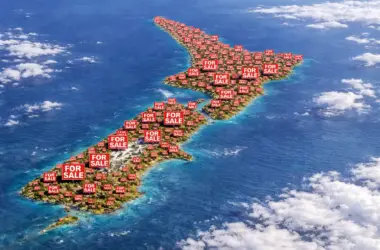
In the premium property market, off-market luxury property sales have moved well beyond niche territory. For many luxury homeowners, it’s now the deliberate strategy of choice.
The reasons rarely have anything to do with speed or convenience. They’re about privacy, security, and long-term control over information.
The Problem with Public Exposure
Once a luxury property is marketed publicly, its digital footprint becomes nearly impossible to erase.
High-resolution photography of interiors, detailed floor plans, and property layouts get syndicated across portals, indexed by search engines, and copied by third-party websites. Even after a successful sale, this information can remain accessible indefinitely.
There’s more. Owner information is increasingly published on real estate portals alongside property details. Companies routinely scrape and resell this data to property market analysts, data brokers supplying information to agents, and marketing companies targeting homeowners. Much of this data is inaccurate, but it can still be used to identify owners, estimate wealth, or target them for unsolicited approaches.
For high-net-worth individuals, this represents genuine risk. Internal layouts and access points remain visible online. Personal possessions, art, and lifestyle details get archived permanently. Owner data can be aggregated, sold, and misused.
For many luxury homeowners, this level of permanent visibility is simply unacceptable.
It’s easy to assume these privacy concerns won’t affect you as a vendor. After all, you’re leaving the property behind.
But premium properties with significant price tags can take time to find the right buyer, sometimes years. Circumstances change. And throughout that period, your home’s details remain permanently exposed online.
Even when you do sell successfully, there’s a question worth considering: would you want to hand over the keys knowing you’ve left the new owners with a permanently compromised digital footprint?
What Off-Market Actually Offers
The reason I endorse sellers to consider an off-market strategy, one that I employ when selling my own home, is they gain significant advantages:
Privacy and discretion. No public listings, photographs, open homes, or online price history. This matters enormously for high-profile sellers, those navigating divorces or estates, or properties with tenants in place.
Less disruption. Fewer showings and no open homes make life considerably easier for families, pets, and occupied properties.
Generally Cheaper. Selling on-market can be an expensive exercise as there are often hefty costs associated with public advertising (web, print, radio, real estate magazines etc.).
Control over information. Sellers decide exactly who knows the property is available, eliminating public price tracking and days-on-market data. But there is a caveat: if you sell through a real estate agency check what they do with the data first.
Price testing without stigma. There’s genuine value in being able to test pricing quietly, without accumulating visible price drops or extended market time.
Reduced emotional pressure. No public feedback, online comments, or constant comparisons to other listings.
Negotiation leverage. In some cases, buyers will pay a premium to avoid competition or secure exclusivity.
Flexibility on terms. It’s often easier to negotiate rent-backs, extended settlements, or unique conditions when transactions happen discreetly.
Targeted buyer matching. Properties should only be shown to qualified buyers who genuinely align with the seller’s goals. Again, choose your representative carefully.
Importantly, off-market doesn’t mean unmarketed. It means selectively marketed.
A Structural Shift
Traditionally, off-market luxury property transactions relied heavily on real estate agents and their private buyer databases. That’s no longer the only path.
New platforms now enable sellers to access buyer-focused off-market environments without listing publicly, and without necessarily using an agent at all.
Rather than broadcasting a property to the open market, these platforms match properties only to vetted HNW and UHNW buyers, forward opportunities based on genuine suitability rather than volume, and avoid public advertising, portals, and mass email campaigns.
This represents a meaningful shift. Off-market distribution can now be precise, controlled, and data-driven, rather than reliant on broad exposure or personal networks.
The Trade-Offs Are Real
Off-market luxury property selling isn’t widely understood, and genuinely capable platforms remain rare. We work with international buyers on property research, market analysis, and acquisitions across New Zealand’s premium market.
If you’re considering selling your off-market luxury property and it fits the profile, we’d be happy to share details with clients where there’s a genuine match. To be clear: we’re not real estate agents. We represent buyers on a fee-for-service basis, so you’ll need to handle the sale yourself or appoint your own agent..
Reduced exposure. Fewer eyes mean fewer offers. This is the most significant consideration. And if you choose a real estate agent/agency, then you are relying on them to make sure your property is matched to the enquiry.
Price discovery. Without competitive bidding, properties may not achieve the price that open-market competition could generate. In fast-moving or appreciating markets, this risk increases.
Network dependency. You can’t sell a secret, so success often depends heavily on the quality of the agent’s or platform’s buyer pool and relationships.
Missing emotional buyers. End-users who overpay because they fall in love with a property typically emerge through open-market exposure.
Real Estate Agent Fees. Many real estate agents make commissions on advertising fees, so selling off-market is often less appealing than an on-market listing.
The Buyer Perspective
Off-market selling is primarily a seller-led decision. However, there’s a legitimate downstream benefit for buyers, particularly in the luxury segment.
When a property is sold privately, internal photography may never be published. Floor plans and layouts may never enter the public domain. The long-term digital footprint of the home is materially reduced.
For buyers concerned with future security and privacy, this genuinely matters. They’re not seeking anonymity during negotiations, which are never public anyway, but protection from inheriting a permanently exposed asset.
Does Off-Market Sacrifice Value?
Not necessarily.
In strong premium markets, off-market properties can achieve excellent outcomes when pricing is realistic and well-positioned, buyer selection is highly targeted, and distribution is controlled rather than indiscriminate.
In some cases, buyers will pay a premium for discretion alone.
The Bottom Line
Off-market selling in the luxury space isn’t about secrecy. It’s about asset protection in a digital world, from permanent internal imagery to aggregated owner data that gets sold and resold online.
For homeowners who value privacy, security, and long-term control over how their property and identity exist online, off-market is increasingly not an alternative. It’s the preferred approach.
Again, choose your off-market partner carefully, and ensure you have in writing what they do with your data. I think most of our readers will be surprised what happens to listing data.
Privé supports qualified international buyers with property research, market analysis, and acquisitions across New Zealand’s premium market. prive.nz
Related
Market Your Luxury Property in New Zealand, Off-Market and Discreetly
Register New Zealand Off-market Property
The Insider’s Guide to Buying Property in New Zealand: Part 1