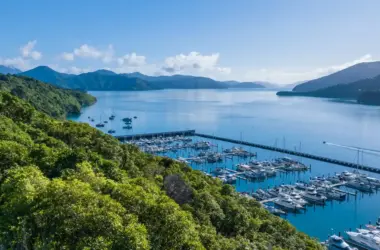
A practical guide to the Active Investor Plus visa, property acquisition, and the pathway between them.
Introduction
For international families considering New Zealand, the conversation almost always begins with property. A waterfront estate in the Bay of Islands. A vineyard in Hawke’s Bay. A private retreat above Queenstown. The aspiration is clear. But the pathway to buying property in New Zealand as a foreigner is more complex than most expect.
New Zealand’s foreign buyer restrictions, introduced in 2018, remain substantially in place. However, a significant amendment to the Overseas Investment Act, effective 6 March 2026, now permits holders of the Active Investor Plus (AIP) residency visa (commonly known as New Zealand’s golden visa) to purchase or build one residential property valued at NZ$5 million or more.
This guide outlines the practical pathway from initial interest to settled ownership: the investor visa, the qualifying investment, the tax structuring, and ultimately the property itself. It is written for high-net-worth individuals and families from the six nationalities most actively pursuing the AIP visa in New Zealand: the United States, China, Hong Kong, Germany, Singapore, and Taiwan.
At Privé, we coordinate this entire process. While we are known for property acquisition and project delivery, our role extends well beyond real estate. We work as the single point of continuity across immigration, legal, tax, investment, and banking, ensuring each step is sequenced correctly and nothing falls between the cracks.
The Active Investor Plus Visa
The AIP visa is New Zealand’s primary pathway for high-net-worth migrants seeking residency through investment. It offers permanent residency, requires no job offer or business ownership, and has become one of the most attractive investor visa programmes globally, particularly given the suspension or tightening of competing programmes in the UK, Australia, and parts of Europe.
As of January 2026, Immigration New Zealand has received 532 AIP applications representing over NZ$3.16 billion in potential new investment. The programme draws from 33 countries, led by the United States at 38 per cent, followed by China (16%), Hong Kong (13%), Germany (7%), Singapore (5%), and Taiwan (5%).
Two Investment Categories
Growth Category. A minimum investment of NZ$5 million in higher-risk, qualifying investments (managed funds or direct investments approved by Invest New Zealand) over a three-year holding period. Approximately 80 per cent of applicants choose this category.
Balanced Category. A minimum investment of NZ$10 million in a mix of lower-risk investments (including bonds and listed equities alongside qualifying investments) over a five-year holding period.
Critically, these investment amounts are separate from the NZ$5 million required for property acquisition. An applicant under the Growth Category, for instance, needs a minimum of NZ$10 million in total: $5 million for the qualifying investment and $5 million for the property.
Key Visa Requirements
- Funds must be transferable to New Zealand within six months of approval in principle
- Good character test, including police certificates from every country of residence
- Medical examination and chest X-ray
- No fraud or dishonesty convictions
- Application fee of approximately NZ$27,470 + application processing fee by your chosen immigration lawyer
- Reported average processing time of 33 working days to approval in principle. In practice this can be as long as six months if the applicant’s history is complicated.
The visa grants permanent residency. Time-in-country requirements are modest, making it well suited to families maintaining international lifestyles who want a genuine Plan B, a safe base, or a long-term home.
Considerations by Nationality
While the AIP visa pathway is the same regardless of origin, the tax, banking, and legal implications vary materially by nationality. These differences influence the sequence, the structuring, and the professional team required. Below is a summary of the key considerations for each of the six leading nationalities.
United States: Tax and Structuring Considerations
US citizens are taxed on worldwide income regardless of where they live. This creates unique complexity around foreign property ownership, foreign trusts, and financial account reporting (FBAR and FATCA). Ownership structure, whether personal, through a trust, or via an entity, has significant and often irreversible US tax consequences.
Coordinated advice from both US and New Zealand tax specialists is essential before buying property in New Zealand. The country has no broad capital gains tax and no stamp duty, which can work favourably for American buyers, but the interaction between the two tax systems requires careful planning.
Read our Moving to New Zealand from the USA post
China: Capital Controls and Fund Transfers
Chinese nationals face capital controls that limit overseas transfers to US$50,000 per person per year under standard SAFE regulations. Structuring the movement of investment and property funds to New Zealand requires early planning and, typically, the use of established offshore holdings or business proceeds.
Source-of-funds documentation must satisfy both New Zealand banking requirements and immigration scrutiny. The AIP’s six-month transfer window after approval in principle makes advance preparation of fund flows critical.
Hong Kong: Security, Planning, and Plan B
Hong Kong residents generally benefit from a simpler capital movement environment than mainland China but should consider the evolving regulatory landscape. Many Hong Kong applicants are motivated by long-term security and Plan B considerations.
Hong Kong has no capital gains tax, making the transition to New Zealand’s tax environment relatively straightforward, though cross-border structuring still warrants specialist advice, particularly around trusts and family wealth.
Germany: Exit Taxation and Double Tax Agreements
German tax residency rules are stringent, and Germany taxes worldwide income for its residents. Exiting German tax residency triggers specific obligations, including potential exit taxation on unrealised gains.
German applicants should plan their departure and New Zealand arrival carefully, ideally with coordinated German and New Zealand tax advice. Germany’s double taxation agreement with New Zealand helps prevent double taxation, but requires correct structuring to be effective.
Singapore: Free Trade Advantages and the AIP Alternative
Singaporean citizens hold a unique advantage: under the AANZFTA free trade agreement, they can purchase residential property in New Zealand without requiring an investor visa, provided they have resided in New Zealand for the past twelve months. For those who have not, or who are acquiring sensitive land, the AIP visa remains the clearest pathway.
Singapore’s territorial tax system and absence of capital gains tax simplify the cross-border picture, though New Zealand’s foreign investment fund (FIF) rules and transitional tax residency provisions should be considered.
Taiwan: Worldwide Income and Treaty Gaps
Taiwanese applicants should be aware that Taiwan taxes worldwide income for its tax residents, with a progressive rate structure. The interaction with New Zealand’s tax system, particularly during the transition period, requires careful planning.
Taiwan does not have a double taxation agreement with New Zealand, which can create additional complexity around foreign tax credits. Early engagement with cross-border tax specialists is advisable.
The Pathway: From Interest to Ownership
The families who achieve the best outcomes follow a deliberate sequence. Rushing to property before the foundations are in place leads to compromised options, structural inefficiencies, and unnecessary risk. Here is the pathway we recommend and coordinate.
1. Immigration and Visa Strategy
Determine the appropriate AIP category (Growth or Balanced) based on your investment appetite, risk tolerance, and timeline. Engage immigration counsel to prepare and submit the application. Average processing time is 33 working days to approval in principle. We coordinate with experienced immigration specialists who work regularly with high-net-worth applicants from your jurisdiction.
2. Investment Selection and Compliance
Identify qualifying investments that satisfy InvestNZ approval requirements while aligning with your own financial objectives. Growth Category investments must be New Zealand-domiciled, with the potential to tangibly benefit the economy. This step runs in parallel with the visa application and requires independent due diligence. InvestNZ approval does not constitute a government guarantee.
3. Cross-Border Tax Structuring
Before any property transaction, your ownership structure must be established with input from tax advisors in both New Zealand and your home jurisdiction. This determines how the property is held (personally, through a trust, or via a company), how income and gains are treated, and what reporting obligations arise. Getting this wrong is expensive and often irreversible.
4. New Zealand Banking
Establish banking relationships early. New Zealand banks apply rigorous anti-money laundering and source-of-funds requirements, particularly for large international transfers. The documentation required varies by nationality and wealth structure. Starting this process months before settlement prevents delays when you are ready to move on a property.
5. Familiarisation and Location Decision
With your AIP visa and financial foundations in progress, visit New Zealand to make an informed location decision. Through Privé Local, we arrange curated familiarisation area and property visits: private viewings of premium properties (often before they reach market), property viewing by air and sea when applicable, vineyard visits, school inspections, and introductions to the professionals and communities that will support your life here. You leave with clarity, not pressure to buy.
6. Property Acquisition or Build
Now the search begins in earnest. Through Privé Search, we act exclusively on your behalf, sourcing on-market, off-market, and private sales opportunities, conducting independent due diligence, and managing negotiation and transaction coordination alongside your preferred legal team.
If existing stock does not meet your vision, Privé Build delivers bespoke residences from concept through to completion, with independent project oversight protecting your interests throughout.
7. OIO Consent
AIP visa holders purchasing residential property valued at NZ$5 million or more must still notify the Overseas Investment Office, even if the property in question is not deemed sensitive. This is a relatively quick process, as little as a few days, and could be deemed a formality unless the property location or applicant nationality is considered to contravene the national interest.
If the property involves sensitive land (waterfront, rural holdings exceeding five hectares, or land adjoining conservation areas), a more substantive OIO consent process applies, assessed against a ‘benefit to New Zealand’ test. We coordinate both pathways with your legal advisors as a matter of course.
8. Settlement and Beyond
With visa granted, investment placed, structure established, and property secured, the final step is settlement: transfer of ownership, completion of payment, and the beginning of your life in New Zealand. For many clients, this is also where Privé Retreats begins, helping you manage your New Zealand property as part of a broader international collection of homes.
The NZ$5 Million Property Threshold
The amendment permits AIP visa holders to purchase or build one residential property valued at NZ$5 million or more. Several practical points deserve attention.
The threshold is a minimum, not a cap. There is no upper limit on property value. The restriction is on the number of properties (one residential), not the price.
The property must not be classified as sensitive land unless separate OIO consent is obtained. Sensitive land includes non-urban land over five hectares, foreshore, lakefront, and land adjoining reserves or conservation areas. Many of New Zealand’s most desirable properties (waterfront estates, large rural holdings, coastal retreats) fall into this category.
OIO consent for sensitive land is obtainable but requires a structured application demonstrating benefit to New Zealand. Using one of our recommended OIO specialists can significantly help you determine the likelihood of being able to buy sensitive classified properties, and present a stronger application.
The exemption applies to one residential property. Commercial and industrial property remain open to foreign investment under different rules and are not subject to the $5 million threshold.
Building a new home of the required value is also permitted. For clients whose vision cannot be met by existing stock, a new build on appropriately zoned land is a well-established pathway. Privé Build manages this process from land identification through design, consenting, construction, and handover. The combined land and house build value must meet this minimum $5M threshold.
Please note, this minimum does not apply to Australian and Singaporean AIP visa holders.
How Privé Works
Privé is New Zealand’s private property office. For twenty-five years, we have helped international families find, acquire, and build the country’s finest properties. But our role has always extended beyond the transaction itself.
For international clients, property is the destination, but the journey begins with immigration, investment, tax, and banking. These are not separate workstreams. They are interdependent, and the sequence matters. A misstep in structuring can limit your property options. A delay in banking can cost you a property. A visa timeline misaligned with a build programme creates unnecessary risk.
We act as the single point of coordination across all of these disciplines. We do not provide immigration, legal, tax, or investment advice ourselves. We work with a carefully selected network of specialists in each field, professionals we have worked alongside for years and trust to deliver at the standard our clients expect. Our role is to ensure the entire process moves in the right sequence, at the right pace, with nothing falling between the cracks. One relationship is all you need.
Our Core Services
| Service | Description |
|---|---|
| Privé Search | Independent property acquisition. We represent you exclusively, sourcing, assessing, negotiating, and coordinating the purchase of premium residential and lifestyle properties across New Zealand. |
| Privé Build | Design and build, independently overseen. From land identification through to handover, we manage the delivery of bespoke residences and estates under a client mandate, protecting design intent, controlling cost, and maintaining quality. |
| Privé Local | Your private introduction to New Zealand. A curated familiarisation programme: private property viewings, regional tours, lifestyle experiences, and professional introductions, so you choose your location with confidence before committing. |
| Privé Retreats | An international portfolio of holiday homes. We help you acquire, create, and manage a personal collection of retreats: properties you enjoy, lend privately, or generate income from when not in use. |
Next Step
If you are considering New Zealand and would value a single point of coordination across the entire process, from visa strategy through to property settlement, we would welcome a confidential conversation.
Schedule a Discovery Call Book a complimentary introductory call with our founder, Ian Thompson.
This guide is provided for general information purposes only and does not constitute immigration, legal, tax, or investment advice. Privé is not a licensed immigration advisor, law firm, tax advisor, or financial advisor. All professional advice should be obtained from appropriately qualified and licensed specialists. Information is current as of February 2026 and is subject to change.
Related
The Insider’s Guide to Buying Property in New Zealand: Part 1
Active Investor Plus Update by the New Zealand Government 12th Dec 2025