A practical and honest guide for families considering New Zealand as a primary residence, buying a second home, or long-term Plan B.
I moved to New Zealand from the UK 25 years ago. I left a business I’d built in London, said goodbye to close friends, and took a considered bet that New Zealand would be a better place to raise a family. For the most part, I was right.
In the years since, I founded a few companies, Privé | New Zealand’s private property office, being one of them. We have spent over two decades helping international families acquire existing properties and build some of the country’s finest homes, working exclusively for buyers, charging only for our time and judgement, with no commissions and no conflicted incentives. We don’t sell property. We have no interest in which property you buy or at what price. Our only job is to help you make the right decision. Promo over!
In that time, I have watched international families arrive with serious intent and make expensive mistakes that were entirely avoidable, almost always because their first call was to a real estate agent whose legal obligation runs to the seller, not them, the buyer. It still amazes me today how many locals don’t understand this either.
This guide is my honest version. Not a tourism brochure, and not a legal document. It is what I tell people privately when they ask me whether New Zealand makes sense for them, and how to go about it if it does.
The rules around international buyers purchasing property here have just changed in a meaningful way. But the change is narrower than the headlines suggest, and the practical pathway is more involved than most people expect. If you’ve read something recently about New Zealand “lifting its foreign buyer ban,” then take a breath. The ban hasn’t been entirely lifted. A door has been opened, but it’s a specific door, with a specific key, for a specific type of buyer.
Let me walk you through what’s actually happening.
A Bit of Background
In 2018, the then-Labour government introduced what was broadly described as a “foreign buyer ban.” The intent was to cool a housing market where overseas money was blamed for pushing prices out of reach for ordinary New Zealanders. The legislation wasn’t as sweeping as the name implied. Australians and Singaporeans were largely exempt, and various consent pathways remained. But for most international buyers, the door effectively closed. In reality this ban just stopped the smaller top end of the market that 99% of Kiwis couldn’t reach anyway, so yet another ill thought through policy in many people’s minds.
Fast forward to December 2025. New Zealand’s economy has been under real pressure for several years. Population outflows are at record levels, with more than 130,000 people leaving the country in the year to April 2025 alone, the majority of them being New Zealand citizens. The current government has been actively working to attract high-net-worth international investors, and it found itself in an awkward position: it had relaunched an investor visa programme designed to attract serious capital, but the people applying couldn’t actually buy a home here to live in. That’s a hard sell, and again ill thought through.
The result was an amendment to the Overseas Investment Act, passed under urgency in December 2025, effective from 6 March 2026.
So, Who Can Actually Buy?
Here’s where it’s worth being precise, because the answer differs significantly depending on where you’re from and what you hold.
New Zealand citizens can buy freely, anywhere, with no restrictions. That applies whether you live here or not. Gaining New Zealand citizenship for ordinary residents is relatively easy too.
Australian and Singaporean citizens who are ordinarily resident in New Zealand can buy standard residential and lifestyle property without requiring OIO consent, and there is no minimum purchase price. If they are not yet ordinarily resident i.e. AIP Visa holder, then they need OIO consent to buy. And if the property is “otherwise sensitive” (on an island, adjoining a beach, river, lake, or conservation area) OIO consent is required regardless of residency status. See this article here
Holders of a New Zealand residence class visa can buy freely, but only once they meet the legal definition of “ordinarily resident.” That definition is more specific than most people assume: you must hold a current residence class visa, have been actually living in New Zealand for the 12 months immediately before the transaction, and have been present in New Zealand for more than 183 days of those 12 months. Many new arrivals on a resident visa will not yet meet this test, even if they believe they do.
If you hold a residence visa but are not yet ordinarily resident, you can apply to the Overseas Investment Office (OIO) for consent to buy or build one home to live in. That consent comes with conditions: you must move into the property as your main home within three months of settlement, and you must be present in New Zealand for more than 183 days per year from the date consent is granted. Anyone in this situation should get specific legal advice before assuming which category they fall into.
Everyone else, which is most international buyers, is where things get complicated. And where the December 2025 change matters.
The New Pathway: The AIP Visa and the $5 Million Threshold
The amendment carves out one meaningful new exception. Holders of the Active Investor Plus (AIP) visa, New Zealand’s investor residency programme sometimes called the golden visa, can now purchase or build one residential property valued at NZ$5 million or more.
This is significant. It’s also very specific.
The AIP visa itself requires a minimum investment of NZ$5 million into qualifying New Zealand businesses or funds. That investment is entirely separate from the property purchase. So if you’re coming in through the Growth Category of the AIP, you’re looking at a minimum of NZ$10 million in total capital deployment: $5 million into qualifying investments, and $5 million or more for the property.
The OIO consent process for these purchases is streamlined, typically decided within five working days, with application fees of NZ$2,040 for an existing home and NZ$3,500 for a new build. Every application is assessed against a national interest test, which considers whether the purchase could be contrary to New Zealand’s interests, including proximity to sensitive national infrastructure such as defence installations. In practice, the vast majority of standard residential purchases clear this at the first stage without issue. It is a genuine screen, but for a straightforward home purchase in a normal location, it is unlikely to create any difficulty.
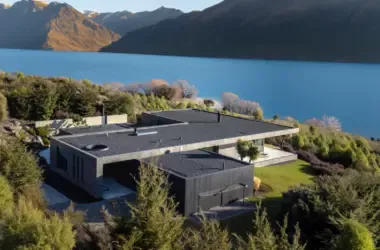
The property must not be classified as sensitive land, however, unless you obtain a separate and more substantive OIO consent. And here’s the practical tension: many of the most desirable properties in New Zealand are sensitive. Waterfront estates, large lifestyle blocks, coastal retreats above Queenstown, properties with lake or river frontage. All of these trigger additional scrutiny, assessed against a “benefit to New Zealand” test. It’s obtainable, but it requires a structured application and the right specialist advice. Don’t assume that because you qualify under the AIP pathway, any property you want automatically follows.
It is worth noting that the NZ$5 million minimum purchase threshold does not apply to Australian and Singaporean buyers. That requirement is specific to the AIP visa pathway.
You can also hold only one residential property acquired under these rules at a time. There’s no cap on value, but there is a cap on quantity.
The Real Estate Reality: What the Agents Won’t Tell You
Here I want to be direct, because this is something I’ve written about at length elsewhere and it applies with particular force to international buyers who are unfamiliar with how New Zealand’s property market works.
When you engage with a real estate agent in New Zealand, at an open home, through an enquiry, via email, that agent is legally obligated to represent the vendor. Not you. One hundred percent of their fiduciary duty runs to the seller. Their commission increases with the sale price. Their financial interest and yours are structurally opposed.
This isn’t a criticism of the real estate industry, but it’s a point you the potential buyer need to understand 100%.
Commission rates in New Zealand have crept upward significantly. What was once negotiable at around 2% has increasingly been presented as 4% plus GST in premium urban markets, sometimes higher, plus additional administration fees, yes, administration fees. On a NZ$5 million property, that’s $200,000 before tax, typically on top of marketing costs the vendor has already funded separately. There is no structural justification for this level of commission relative to the service delivered, and vendors should negotiate confidently. The first number quoted is not the only option. There are some really good real estate agents out there who charge more competitive commissions, so vendors shop around, because it’s your buyer who really bears that cost.
For international buyers specifically, particularly those arriving with significant capital, unfamiliar with local market dynamics, and perhaps working through interpreters or intermediaries, the risk of overpaying is real. The market is relatively slow across the board, and even slower at the premium end in some key areas. That should work into your favour.
This is why independent buyer representation matters. In my opinion not a buyer’s agent who charges a commission based on the purchase price, as that structure has its own conflict where the person retained to protect your interests earns more if you spend more. I mean genuinely independent advice, charged on a fixed-fee basis, with no financial preference between a $5 million outcome and a $7 million one.
Do your own due diligence, completely. Independent legal advice. An independent building survey. A conversation with council planners about zoning and planned infrastructure nearby. Check flood overlays, insurance implications, and whether there are intensification overlays that could change the character of the neighbourhood. These steps carry a cost that is trivial relative to the scale of the transaction, and they may also give you legitimate grounds to renegotiate.
The Property Appraisal Issue That’s Worth Knowing as a Buyer
When a vendor is thinking about selling their house using a real estate agent in New Zealand, they typically get 2 or 3 property appraisals by prospective real estate agents that largely dictates what the agent feels the property could sell for in the current market. Now this is where a game plays out, an experienced and fair agent might appraise a property at $6M, where another agent might say $8M in order to try and win the listing. This creates more than one problem, it raises a false hope for the vendor and it also sets a possibly unrealistic asking price. An unfamiliar buyer of the market might think this is the right price, where a familiar buyer would know it’s far too inflated. This also means that many properties simply don’t sell and the vendor is left frustrated.
An example of this happened just last week where we received an email from a real estate agent promoting their new listing. I called the agent and asked for the asking price because we have a client that is interested in this location and property type. I was told that $11M will likely secure the property. I quickly researched the property and saw that it was listed with a different real estate company no less than 6 months ago for $8M and did not sell. I’ll leave you to determine the backstory here, but all I’m going to say is the property didn’t change physically at all in the last 6 months, and the market hasn’t dramatically improved in that region.
The Building Quality Issue
I’ve spent 35 years in the building and construction industry, and this is something I feel obligated to mention to anyone buying property here.
New Zealand’s building standards are, in my assessment, 30 to 40 years behind many European equivalents. A significant proportion of the existing housing stock is poorly insulated, cold, and damp. Asthma New Zealand estimates more than half of homes are too unhealthy to live in by their standards. The building consent process is slow, expensive, and weighted toward traditional (often inferior) building systems over cheaper, more sustainable, better performing, and healthier modern European alternatives.
If you’re buying an existing home at the premium end of the market, commission an independent building examination and report from someone with genuine technical expertise, not just a visual inspection. If you’re considering building, understand what you’re getting into before you sign a building contract. My advice, firstly commission a building expert, not an architect, then determine what you want and can budget before you even start the design process.
The Financial Picture
A few things worth knowing before you commit capital.
New Zealand has no stamp duty. On a $5 million property, the saving relative to Australia, where a foreign buyer might face over $100,000 in stamp duty on an $800,000 purchase alone, is material.
New Zealand also has no broad capital gains tax on property, though certain rules apply to properties sold within a bright-line period and to offshore investors. Tax structuring, particularly for US citizens, German residents, or anyone with complex cross-border holdings, requires coordinated advice from specialists in both jurisdictions before you commit to an ownership structure. Getting this wrong is expensive and often irreversible.
Banks in New Zealand will typically require deposits of 30 to 35% from international buyers, and anti-money laundering source-of-funds requirements are rigorous. Start the banking relationship early. A delay in establishing an account has killed deals that were otherwise ready to proceed.
Why Would You Stay?
I moved to New Zealand 25 years ago. I’ve asked myself this question more times than I can count, and my answer has always come back to the same things.
It’s mostly safe. Genuinely, structurally safe in a way that’s becoming harder to find. My children grew up running around outdoors, walking to school, playing sport every weekend. We never really worried about them. That matters.
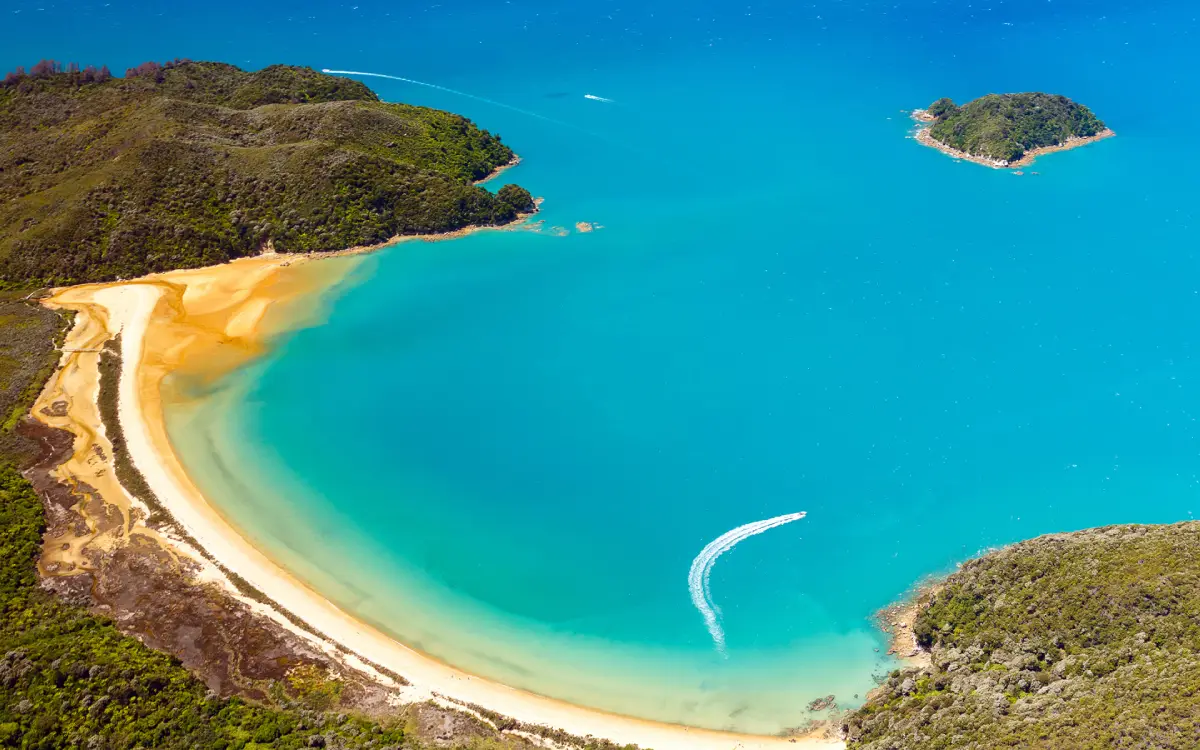
The space is extraordinary. The landscape in places like Queenstown, the Bay of Islands, and the Marlborough Sounds are genuinely world-class environments. Not postcard world-class. Actually world-class.
And for those with the capital to buy at the level the AIP pathway requires, there’s something else. New Zealand is a legitimate Plan B in a world that feels increasingly uncertain. The NZ government moves slowly and talks more than it acts, so don’t expect much to change and disruption – good or bad. Distance from the geopolitical pressure points that are reshaping other parts of the world is in this case a good thing.
So New Zealand is not cheap and It’s somewhat glacial paced. The backward bureaucracy will test your patience, especially the councils. The career opportunities are limited compared to London, New York, or Sydney. I miss a few things about Europe in particular: historic architecture, a good pint and curry, easy and cheap weekend flights to pastures new. But for the right kind of person building a life or a base here on their own terms, there are few places in the world that offer this security and stability.
New Zealand as a Second Home, The Practical Summary
If you hold an AIP visa and are looking at NZ$5 million-plus residential properties, New Zealand is now genuinely open to you in a way it hasn’t been for 8 years. The consent process is somewhat streamlined. The tax environment is favourable. The Plan B case is strong.
But the pathway requires sequencing. The visa. The qualifying investment. The tax structure. The banking. The property search. Each step has dependencies on the one before it, and rushing ahead, buying before your structure is established or settling before your banking is in place, creates risk that is largely avoidable with the right coordination. With the right sequencing and independent advice, a material saving on the purchase price is entirely achievable. At the premium end of this market, that can mean several million dollars.
Get independent legal advice specific to your jurisdiction. Understand the building quality of what you’re buying. Treat any agent’s representation of a property as a starting point for your own investigation, not a substitute for it. And be clear, before you engage anyone, about who they actually represent and how they’re compensated.
New Zealand has the handbrake on. Sometimes it’s actually in reverse gear, but for those who approach it the right way, it rewards that patience in many valuable ways.
Related
Establishing Your Presence in New Zealand
Living in New Zealand: My Honest 25-Year Review (Pros & Cons)
Ian Thompson is the founder of Privé | New Zealand’s private property office. For 25 years, Privé has represented international buyers acquiring and building premium property across New Zealand. Privé charges only for time and judgement, no commissions, no conflicted incentives.
This article is provided for general information purposes only and does not constitute legal, immigration, tax, or financial advice. Information is current as of April 2026 and is subject to change. Always seek professional advice specific to your circumstances.